
Gas Leak Detection & Gas Leak Repair Melbourne
Melbourne’s Home Plumbing Experts – Master Plumbers Member. Professional service focused on prevention to ensure your plumbing lasts for the long term.

Sam & Natasha
Founders, Your Choice Plumbers
We don’t just find gas leaks — we properly diagnose the cause and fix it safely so the problem doesn’t come back. If you can smell gas or your supply has been turned off, we’ll test the system and guide you to the right solution.

Melbourne’s Trusted
Home Plumbing Experts
Gas Leak Detection & Gas Leak Repair Melbourne
We don’t just find gas leaks — we diagnose the cause properly and fix it safely so the problem doesn’t come back.

 VBA Licensed Insured
 Master Plumbers Member
 Fixed Upfront Pricing
 Local Family Owned

Sam & Natasha
Founders, Your Choice Plumbers
Melbourne’s Trusted
Home Plumbing Experts
Gas Leak Detection & Gas Leak Repair Melbourne
We don’t just find gas leaks — we diagnose the cause properly and fix it safely so the problem doesn’t come back.

Sam & Natasha
Founders, Your Choice Plumbers
VBA Licensed Insured
Master Plumbers Member
Fixed Upfront Pricing
Local Family Owned
What Type of Gas Leak Problem Do You Have?





Real Gas Leak Detection & Repair Work in Melbourne
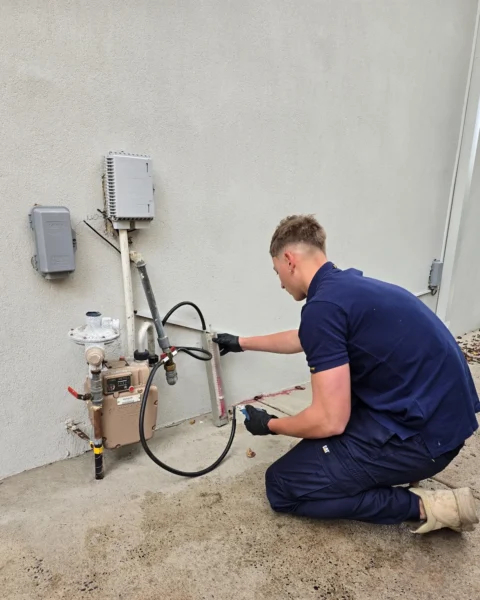
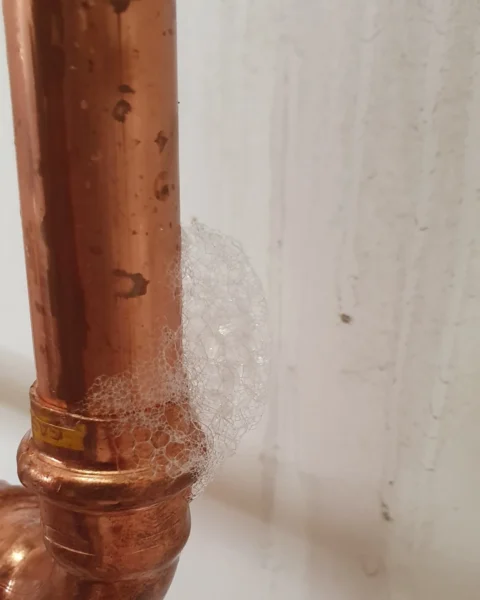
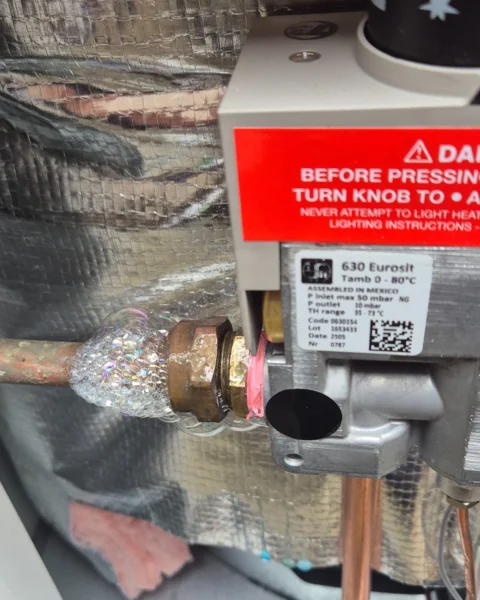
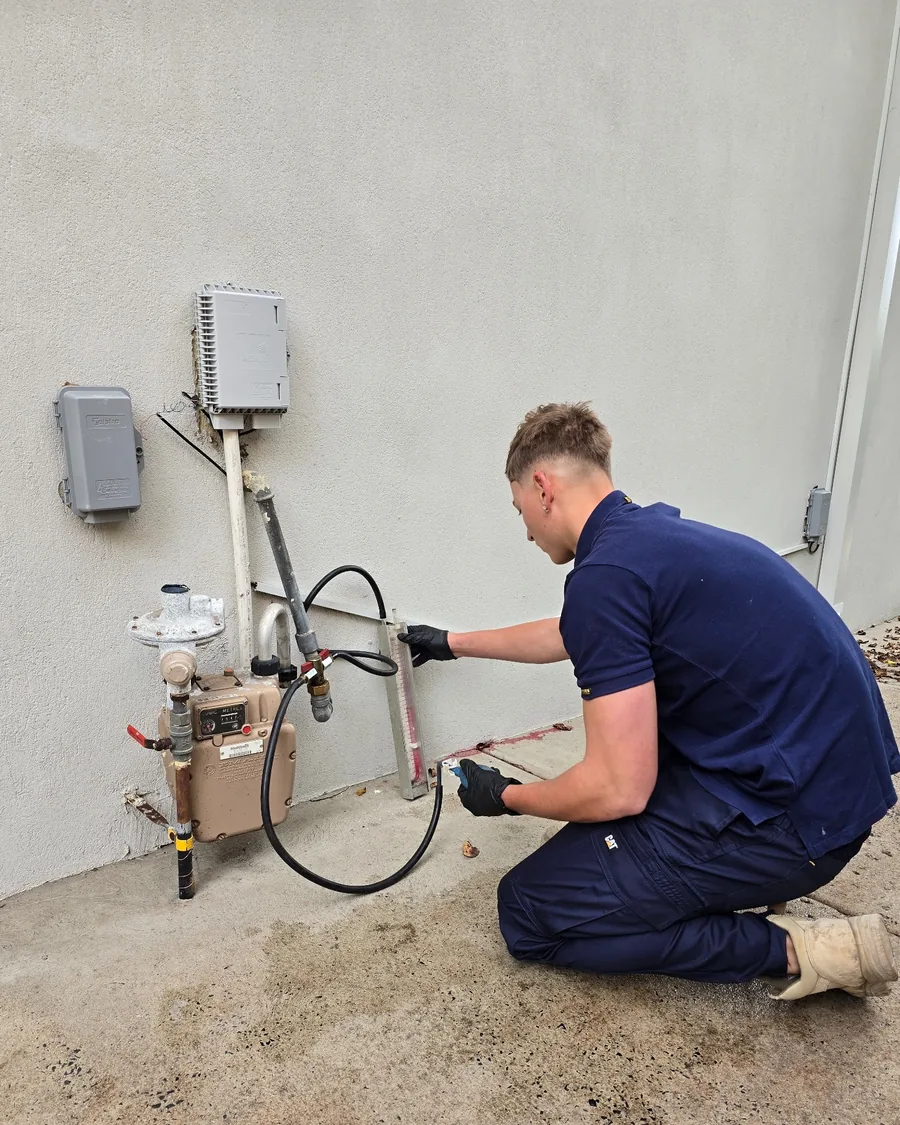
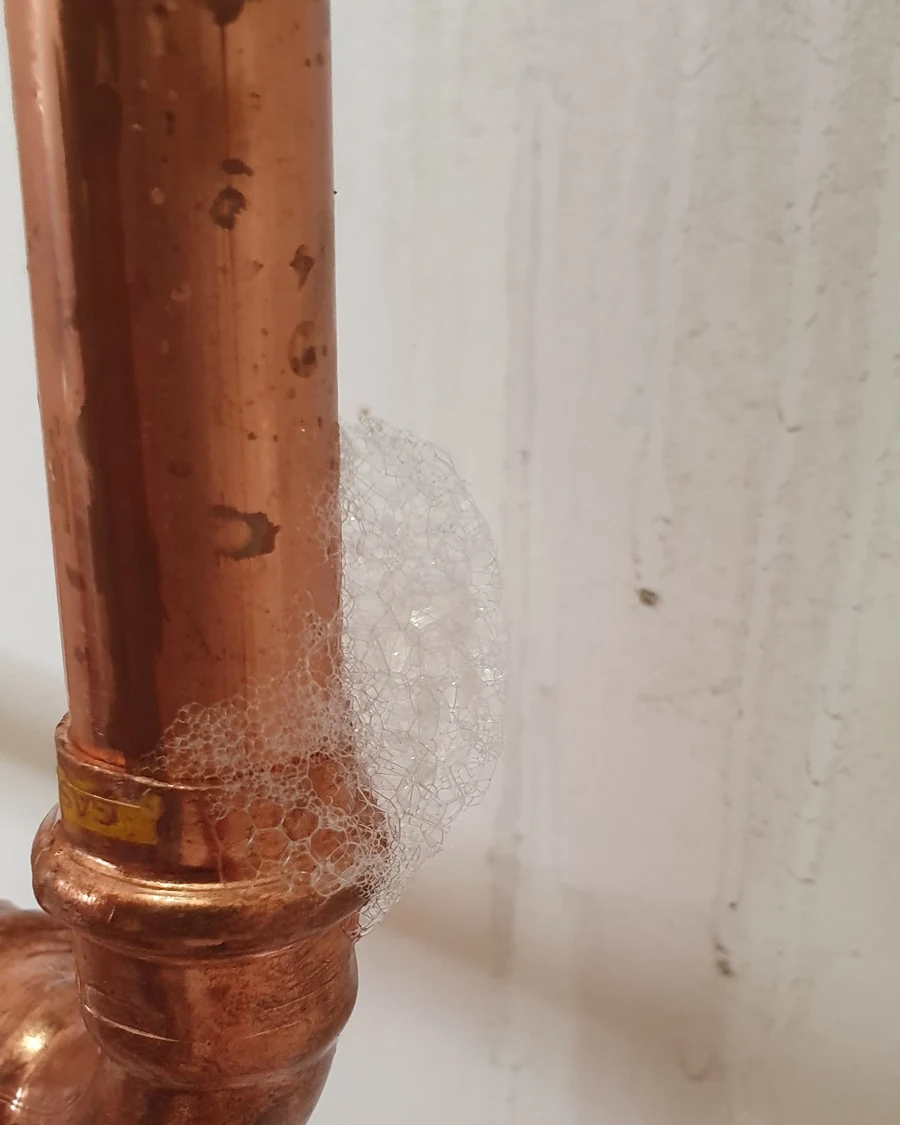
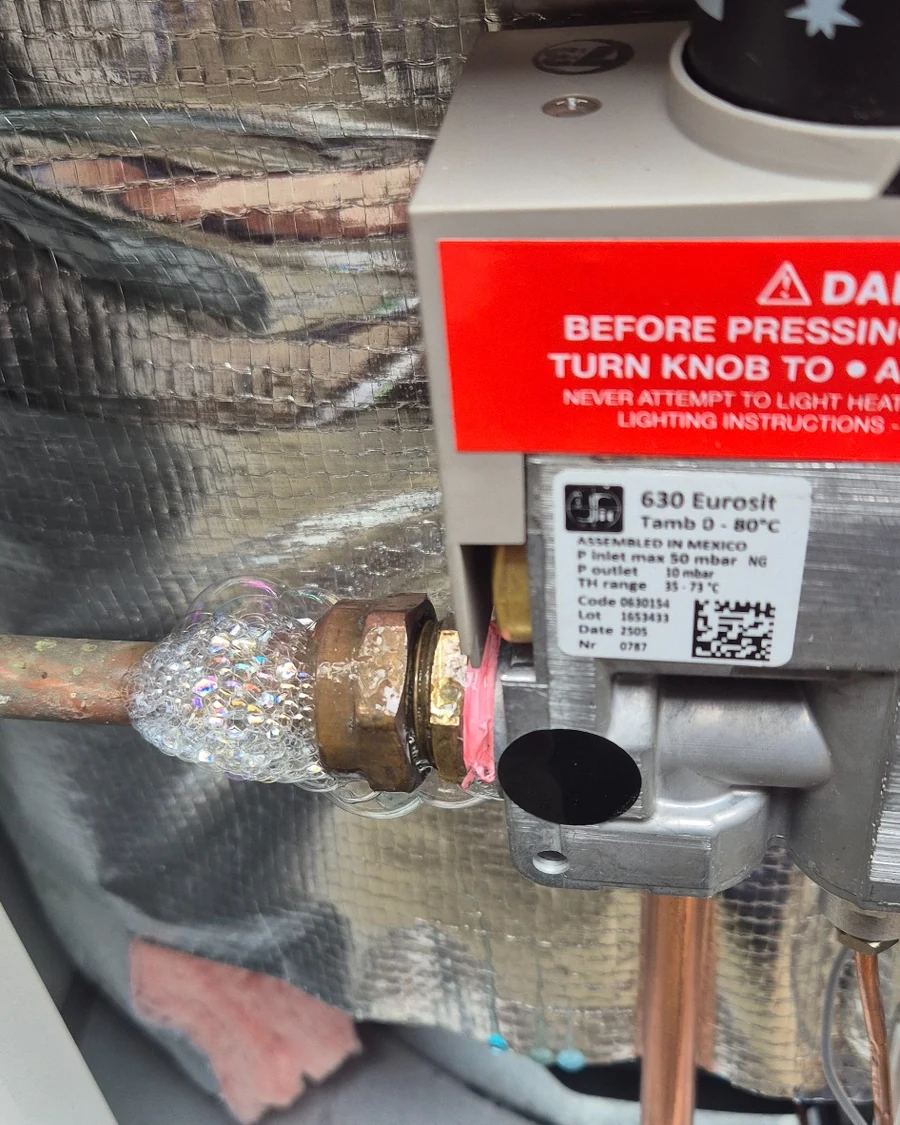
Gas Leak Detection Melbourne
If you can smell gas in your home, near the meter, or around an appliance, it should be treated seriously. A licensed gas leak plumber Melbourne homeowners trust can pressure test the consumer line, isolate the fault, and carry out safe repairs. In many cases, same day gas leak repair Melbourne is possible once the source is confirmed and the installation is made safe.
What should I do if I smell gas in my house?
Turn the gas off at the meter if it is safe to do so, avoid electrical switches, open windows, and arrange a licensed gas fitter to inspect the system as soon as possible.
Is a gas leak an emergency plumber job?
Yes, it can be. Gas leaks involve safety risk, especially if the smell is strong, ongoing, or coming from enclosed areas like cupboards, wall cavities, roof spaces, or under the house.
Who fixes gas leaks in Melbourne?
Gas leaks should be diagnosed and repaired by a licensed gas fitter who can test the consumer line properly, locate the fault, and recommission the installation safely.
Can you fix a gas leak the same day?
Often yes. If the leak is accessible and the damaged section can be safely repaired or replaced, same-day repair is commonly possible after testing.
What if I smell gas near my meter?
That can indicate a leak on the consumer line, meter-side connection, regulator area, or external gas pipework. The safest next step is proper testing from the meter onward so the source can be confirmed and repaired.
5-Star Trust: What Our Local Customers Say About Sam, Natasha & The Team
Gas Leak Problems We Diagnose & Repair Across Melbourne

Gas Smell Inside the House
Gas smells inside the home are one of the most common issues we diagnose, and they’re often not coming from the appliance itself. What seems obvious is frequently misleading — proper testing is the only way to confirm the real source safely.
What you’re experiencing:
You may notice a smell of gas in house Melbourne homes commonly report near the kitchen, beside the heater, around the hot water unit, or inside a cupboard where a gas connection runs. Sometimes the smell is constant. Other times it seems to come and go depending on appliance use. In older Melbourne homes on stumps, the smell may drift into bedrooms, hallways, or living areas even though the actual leak is below the floor. Homeowners often say it smells stronger at night, early in the morning, or when the house is closed up.
Likely causes
This can be caused by a leaking appliance connection, worn fitting, faulty isolation point, damaged bayonet connection, poor previous installation, or a gas appliance leak repair issue involving the pipe feeding the unit rather than the appliance itself. If the home is built on stumps, corrosion in the original gas line under the house is another common cause. Older galvanised steel pipe, aging copper sections, unsupported pipe runs, and mixed old-and-new alterations can all create weak points. Gas can leak below the floor and travel up through gaps in floorboards, cupboards, or service penetrations, which is why the smell is not always strongest directly above the fault.
What we typically find on-site:
In many Melbourne homes, we find small leaks around cooktop connections, upright cooker points, ducted heater connections, gas hot water services, or old concealed joints that have slowly deteriorated over time. We also regularly find gas leak under house Melbourne scenarios in stump-floor homes where the original pipe has corroded in damp conditions. A strong real-world example is our Murrumbeena case study, where owners noticed gas inside a bedroom and the fault turned out to be old under-house galvanised gas pipe lying on damp ground rather than being properly supported. In some jobs, the homeowner assumes the cooktop is leaking, but the real issue is an older line feeding the appliance from beneath the house.
Quick check:
If the smell is clear and persistent, turn off the gas supply if safe to do so, avoid switches or flames, and ventilate the space. Do not keep testing appliances one by one yourself.
Why it matters:
Even a small leak inside or beneath the house should not be ignored. Gas escaping into enclosed or semi-enclosed areas can create safety risk and can also make the source harder to isolate later if the problem spreads through cavities or subfloor spaces.
What happens if ignored:
A minor leak can remain active for weeks or months, worsen over time, or leave you facing a bigger repair once a fitting fully fails, an underfloor pipe deteriorates further, or the gas is eventually turned off by the authority. What looks like a simple smell near a cooker can become a larger repair involving pipe replacement, subfloor access, or recommissioning of multiple appliances.
If the smell is strongest around a cooktop, heater, hot water unit, or seems to be drifting up through the floor, the safest next step is proper testing by a licensed gas fitter before the appliance is used again.

Gas Smell Near the Meter
Gas smells near the meter are something we get called to all the time, and in many cases the issue sits on the consumer line rather than with the gas authority. What seems like an external problem often turns out to be a hidden fault that needs proper testing from the meter onward.
What you’re experiencing:
You may smell gas outside near the meter, regulator, front wall, side path, or along the area where the consumer gas line enters the home. Some homeowners only notice it when walking past the meter box. Others notice it after street works, a gas meter upgrade, regulator replacement, or after the gas has been off and back on. In some properties, the smell is strongest near paving, a front garden bed, or where the line disappears under concrete toward the house.
Likely causes
Possible causes include a loose meter-side connection, regulator issue, leaking consumer line, aged pipework, movement in the line, or a fault in pipework just beyond the meter. It can also be linked to gas leak in copper pipe Melbourne homes have had altered over the years, or to gas leak in old galvanized gas pipe Melbourne properties still rely on from decades ago. Once the problem is on the consumer installation side, it needs to be tested and repaired by a licensed gas fitter.
What we typically find on-site:
We regularly attend gas smell near meter Melbourne jobs where the leak is found on the consumer line after mains renewal works, meter replacements, or new regulator installations. In older homes, these events often expose weak points in aging pipework that had gone unnoticed for years. In other homes, the leak is extremely small and outdoors, so the owner has never smelled gas at all until the authority shuts the supply off. That is exactly what happened in Hawthorn, where meter upgrade testing led to a shutdown and the eventual fault was traced to a tiny leak at a 20mm compression connection serving the ducted heater side of the system. We may find leaks at accessible joints, but we also see gas line leak detection Melbourne jobs where the actual fault is further down the run, under soil, beside the path, or below a driveway.
Quick check:
Do not try to test the line yourself. Keep the area clear, do not use ignition sources nearby, and arrange a licensed inspection.
Why it matters:
A leak outside may seem less urgent than one indoors, but it still needs proper diagnosis. The problem can affect your gas supply, worsen over time, or indicate broader deterioration in the installation.
What happens if ignored:
What starts as a smell at the meter can turn into a gas shut-off situation, a larger repair, or a more complex pipe replacement if the leak source is left unresolved. A small external leak can also become much harder to localise once paving, landscaping, or multiple old alterations are involved.
If you can smell gas near the meter or suspect the line entering the home is leaking, organise testing before the fault spreads or your supply is isolated.

Gas Has Been Turned Off
When your gas has been turned off, it usually means a leak has already been detected and the system has been left unsafe to use. In many Melbourne homes, the cause is not obvious and requires proper testing from the meter onward to confirm exactly where the fault sits.
What you’re experiencing:
Your gas supply may already have been turned off unexpectedly. In real Melbourne jobs, this commonly happens in two situations: either someone has reported a gas leak and the installation has been left isolated for safety, or the gas authority has carried out street mains renewal, meter replacement, or regulator upgrade works and then identified a leak on the consumer line during required testing. Homeowners often discover the shut-off when they find a note at the meter or in the letterbox explaining that the gas has been left off because the installation is unsafe.
Likely causes:
This usually happens when a leak is confirmed, pipework is accidentally damaged, or a significant fault is found during authority testing, renovation work, appliance installation, or maintenance. The fault may be under the house, beneath a driveway, in an old garden-bed route, at an appliance connection, or in older concealed pipework. Gas leak after gas has been shut off Melbourne situations often lead back to longstanding weak points that only become obvious once the line is formally tested. Our Hawthorn case study is a good example: the owner had never noticed gas, but authority testing after a meter upgrade exposed a tiny appliance-side compression leak that may have existed for years.
What we typically find on-site:
When we attend these jobs, we first inspect the meter setup and any notice left on site, then test the gas line from the meter onwards to confirm whether there is still a pressure drop and try to locate the fault. This is where gas pressure test for leak Melbourne work becomes critical. Sometimes the leak is under the house, below a driveway, in a garden bed, or in an older hidden section of pipe. In more open areas, gas sniffers can help indicate whether gas is tracking through soil, under concrete edges, or around subfloor zones. On more complex installations or larger properties, specialist tracer-gas leak detection may be needed to pinpoint the leak path more precisely. In Hawthorn, the first main-line test with appliances isolated held pressure, but the second-stage test with the appliances turned back on showed a drop, proving the leak sat between a shut-off valve and an appliance connection rather than on the main external run.
Quick check:
If the gas has already been turned off, do not turn it back on until the fault has been properly repaired and the system has been pressure tested.
Why it matters:
Gas cannot simply be switched back on and hoped for the best. The source must be found, repaired correctly, and tested so your home is safe before appliances are recommissioned.
What happens if ignored:
Delaying repair leaves you without gas for cooking, heating, or hot water and can create extra cost if the original fault worsens or if access work becomes more involved later. The longer the system stays unresolved, the more likely it is that a simple repair turns into a more intrusive investigation or partial line replacement.
If your gas has been turned off and you have a notice at the meter or in the letterbox, the next step is licensed testing from the meter onward so the leak can be confirmed, located, and repaired properly.

Suspected Pipe Leak Under House or in Wall
Hidden gas leaks are one of the most difficult issues to diagnose because the smell rarely matches the actual leak location. In many Melbourne homes, what seems like a wall or appliance issue is often a concealed pipe fault that requires proper testing to confirm.
What you’re experiencing:
Sometimes there is no obvious leaking appliance. Instead, you may smell gas in one part of the home, hear a faint hissing gas pipe Melbourne homeowners sometimes describe near a wall or floor, or suspect the issue is behind a wall, under the floor, beneath a driveway, or in older subfloor pipework. This is common in homes with old alterations, renovations, older steel lines, or front-yard meter layouts where the gas line takes a long concealed path back to the home.
Likely causes:
Common causes include gas leak under house Melbourne homeowners cannot see, corrosion in damp subfloor areas, damage during building work, movement in unsupported pipework, or a gas leak in old galvanized gas pipe Melbourne homes still have from decades ago. Pipe runs under concrete, through garden beds, across front paths, and inside concealed wall zones can also make leak location more difficult. We also see gas leak in copper pipe Melbourne homes where sections have been added during renovations and left vulnerable in tight cavities or poorly supported areas.
What we typically find on-site:
In many Melbourne properties, we find older galvanised pipe in damp subfloor zones, mixed old-and-new pipe systems, or concealed copper lines running through tight cavities. We also find that homeowners often suspect an appliance fault, but the real issue is the pipe feeding it. The Murrumbeena job is a strong example of this pattern: the pipe changed from copper to old galvanised under the house, sections were left lying on the ground instead of being clipped to the timber structure, and moisture plus age had corroded the line until gas was leaking into the home. Where the line runs through open subfloor areas, around meters, or through garden beds, gas sniffers are useful for giving fast directional clues. On larger or more complex installations, tracer-gas specialists may be required to narrow the search more precisely.
Quick check:
If the smell is repeating in the same area, note where it is strongest and when it occurs, but do not open walls, dig near the line, or crawl under the house to investigate yourself.
Why it matters:
Hidden gas leaks can be hard to detect without proper pressure testing and leak-finding equipment. The longer they are left, the more complicated and invasive the repair can become.
What happens if ignored:
What begins as a small hidden leak can turn into broader pipe renewal, interrupted gas supply, more access work, and avoidable repair costs once the fault worsens. In some homes, a small hidden leak that could have been isolated early becomes a more complex diagnosis involving tracing under concrete, garden excavation, or partial replacement of older pipe sections.
If you suspect a hidden gas line leak behind a wall, under the floor, or beneath the driveway, proper testing now is far safer and usually cheaper than waiting for the fault to become more serious.
What Commonly Causes Gas Leaks in Melbourne Homes?
Corroded older gas pipework
Many older Melbourne homes still have galvanised steel gas lines in subfloors, along external walls, or underground. These can corrode over time, especially in damp areas under stump-floor homes. One of the most common patterns we see is corrosion under the house where the original line has simply reached the end of its safe life, as seen in the Murrumbeena case where ageing galvanised pipe had deteriorated beneath the home.
Poor appliance installation or altered connections
Gas appliances should always be installed and tested correctly. We often attend jobs where previous work was completed, but the system was not properly checked afterward. This is one reason gas pressure test for leak Melbourne searches are so relevant — testing matters, not just visual inspection. The Hawthorn job is a good reminder that a very small connection leak can sit unnoticed for years until the system is properly tested.
Damage during renovation or building work
Builders, cabinet installers, tilers, and renovators can accidentally disturb concealed gas lines. The Glen Waverley gas leak repair is a strong real-world example of how quickly a hidden pipe can be damaged during wall work.
Authority works exposing weak consumer lines
Another common trigger is when the gas distributor upgrades older infrastructure in the street, replaces a meter, or installs a regulator and the consumer line is then safety tested. This often exposes weak points that homeowners were unaware of, especially on older or previously altered installations.
Mixed old and new gas pipework
Homes that have had multiple upgrades over the years often end up with a combination of older galvanised sections, copper additions, newer fittings, and legacy appliance connections. These mixed systems can perform well for years, then fail at the weakest point once the line is properly tested or disturbed by other work.
How We Carry Out Gas Leak Detection & Repair
1. Make the installation safe
We begin by checking whether the gas supply has already been isolated and whether the smell is strongest near the meter, appliance, wall cavity, roof space, subfloor area, driveway edge, or garden bed.
2. Confirm whether the consumer line is leaking
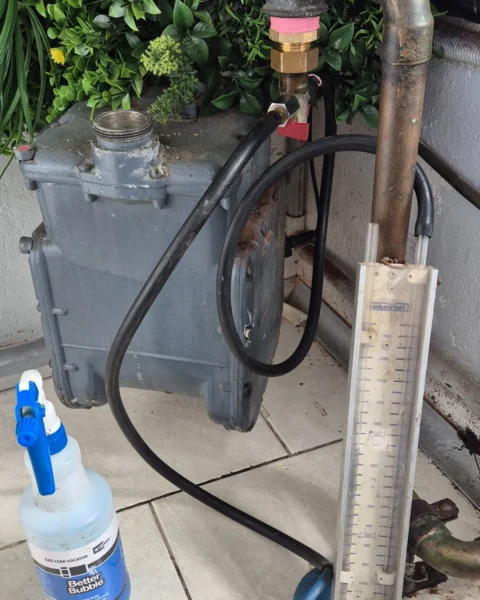
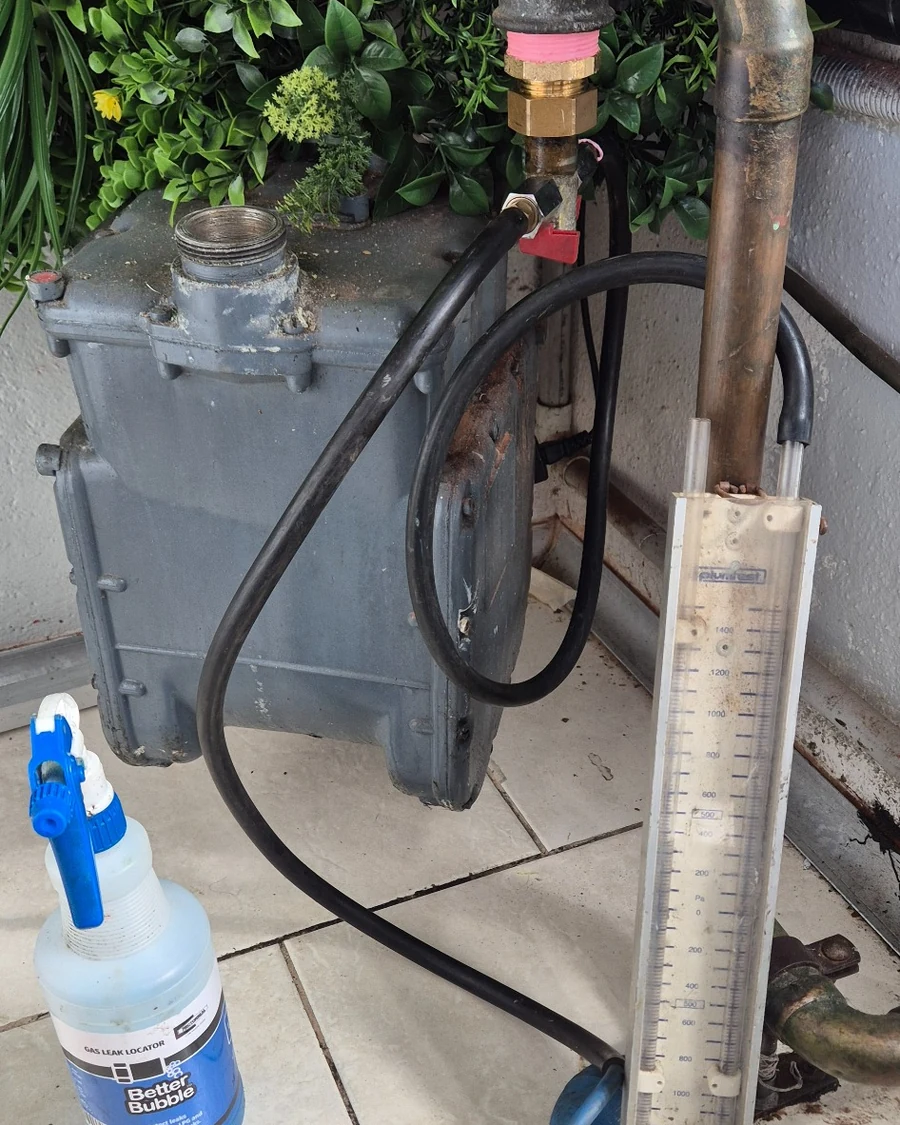
We test the gas line from the meter onwards using a digital manometer to determine whether the installation is losing pressure. This is the foundation of accurate gas leak detection Melbourne work and is especially important when the gas has been turned off by the authority. We test the system first — not guess — so you’re not paying to repair the wrong section.
3. Isolate likely sections or appliances
Where possible, we separate sections of the system to identify whether the fault is in the pipework, connection points, or an appliance-related area. This helps prevent guesswork and reduces the chance of repairing the wrong section first.
4. Locate the leak and explain the findings
We use pressure testing, leak detection solution, electronic gas sniffers where appropriate, and visual inspection to narrow down the source. On open sites, gas sniffers can help indicate whether the leak is tracking under soil, around the meter, beneath a subfloor, or near accessible line routes. On larger or more complex properties, specialist tracer-gas detection may sometimes be needed.
5. Repair or replace the damaged section
Depending on the fault, this may involve tightening or replacing a connection, repairing accessible pipework, or renewing failed sections using suitable compliant materials in line with good gas-fitting practice. Where pipework is badly deteriorated, replacement can be the safer long-term option compared with repeated patch repairs, as seen in Murrumbeena where the unsafe underfloor galvanised section was replaced with hard drawn copper and gas-rated B-Press fittings.
6. Retest and restore service
Once repairs are completed, we retest the line to confirm it is holding pressure. Only then is the system returned to service and appliances checked for correct operation. Where required, the installation is purged and recommissioned safely before normal use resumes.
Gas Leak Detection Melbourne – Real Case Studies & Results from Sam, Natasha & The Team
Emergency Gas Leak Repaired Safely in Glen Waverley VIC 3150
At a Glen Waverley home, a concealed 20mm copper gas pipe was accidentally cut during wall removal works, creating an urgent gas leak inside the living room wall cavity. The gas was shut off at the meter and our team attended within the hour to make the property safe. Because the damaged pipe was hidden in a tight space between internal brickwork and the stud wall, we used B-Press copper repair couplers to replace the damaged section without unsafe open-flame work in the cavity. The full consumer gas line was then pressure tested with a digital manometer for 10 minutes, confirmed sound, and the gas supply was safely restored. Read more: Emergency gas leak repaired safely after pipe damage in Glen WaverleyGas Leak Found Under a Murrumbeena Home VIC 3163
At a Murrumbeena home, the owners noticed a gas smell inside one of the bedrooms and needed the system checked urgently because they had two small children in the house. We pressure tested the gas installation with a digital manometer and confirmed a leak on the consumer gas line. After isolating each appliance, the leak was traced to old galvanised gas pipework under the house that had corroded in damp subfloor conditions. The unsafe pipework was replaced with hard drawn copper pipe and gas-rated B-Press fittings, the system was re-tested, the appliances were safely recommissioned, and a Certificate of Compliance was issued and lodged with the VBA. Read More: Gas leak under a Murrumbeena home traced to corroded galvanised pipeGas Leak Found After a Meter Upgrade in Hawthorn VIC 3122
At a Hawthorn home, the gas supply was shut off by the gas authority during street meter upgrade works after a leak was detected. The owner had never noticed a gas smell, so our team carried out a structured gas leak test using a digital manometer. The main consumer gas line held pressure with the appliances isolated, but a second test with the appliances connected showed a small pressure drop. Using approved gas leak detection solution, we found a micro leak at the ducted heater connection, tightened the faulty compression nut, re-tested the installation, and confirmed the gas line was safe and ready for reconnection. Read more: Gas leak found after meter upgrade shut-off in HawthornLicensed Gas Fitting, Testing & Compliance
Gas work must be carried out by a licensed professional
Gas leaks are not a DIY job. Proper diagnosis and repair requires licensed testing, compliant repair methods, and safe recommissioning of the gas installation.
Testing consumer piping is a critical part of the process
Gas installations in Australia must comply with AS/NZS 5601.1:2022 Gas Installation Standards. Our work follows the procedures outlined in Section 3.5 for testing consumer piping, Section 5 for installation of gas piping, and Section 6 for appliance installation and commissioning so the installation is tested, inspected, and verified as safe before being returned to service.
Gas piping and appliance work must be done properly
Whether the issue is a leaking appliance connection, a damaged copper line, a subfloor gas pipe, or an older steel gas line, the installation needs to be repaired and tested correctly before and after the work. This includes not just stopping the leak, but making sure the system is safe to put back into operation.
Certificate of Compliance where required
After eligible gas plumbing work, we issue a Certificate of Compliance in line with Victorian requirements. This gives homeowners important documentation, warranty protection, and added peace of mind.
Workmanship, insurance and long-term safety
This is about more than stopping a smell. It is about making sure your home’s gas installation is safe, documented, and repaired properly so you are not left guessing whether the issue has really been resolved.
Complimentary Property Protection Audit
With every plumbing service, we provide a Complimentary Property Protection Audit to help identify other preventable risks around the home. This includes checking for:
- Water pressure above 500 kPa in line with AS/NZS 3500
- Deteriorated or stressed flexible braided hoses that can burst and flood a home
- Hidden leak risks and early signs of plumbing failure
- Hot water scald protection, including the 50°C delivery requirement under NCC 2022

This matters because many Melbourne homes have pressure-related plumbing stress that homeowners are not aware of until a hose bursts, a valve fails, or another leak causes avoidable damage. Natural internal links:
- Learn more about our Complimentary Property Protection Audit
- Learn why old hoses matter with our flexible hose replacement safety check
- Explore our broader prevention plumbing advice
Complimentary Property Protection Audit
Every completed plumbing job with Your Choice Plumbers includes our Complimentary Property Protection Audit to help protect your home from preventable water damage and compliance risks. As part of this process, we check for key issues that many homeowners never realise are putting their property at risk, including:
- excessive water pressure above 500 kPa, which can stress taps, mixers, valves, appliances, and pipework
- flexible braided hoses that may be rusted, swollen, poorly supported, or approaching failure
- hot water temperature risks, including scalding concerns where household delivery temperatures are not properly controlled
- visible signs of ageing plumbing components that may fail unexpectedly
This is especially important on everyday home plumbing visits, because repeated fixture failures, hot water issues, leaks, and valve problems can sometimes point to broader pressure or plumbing system stress.
Related Plumbing Services That Melbourne Homeowners Often Need
If a gas leak is discovered during hot water fault finding, our hot water system repairs page explains common issues with gas hot water units and what to do next.
If the real issue turns out to be a concealed water leak rather than a gas fault, our water leak detection service Melbourne page may help.
If pipework has been damaged during renovation or building work, homeowners also often need help with burst pipe repair Melbourne.
If older plumbing systems in the home are also showing signs of age, you may also want to explore our leaking tap repairs Melbourne, leaking shower repairs, and leaking toilet repairs services.
Service Areas Across Melbourne
 Plumber Bentleigh

Gas Leak Detection & Repair Melbourne FAQs
Why would my gas be turned off unexpectedly?
A common reason is that a leak was found or suspected during safety testing, reported by someone on site, or discovered during mains renewal, meter replacement, or regulator works. In those cases, the consumer line must be checked before gas is restored.
Do I need a licensed plumber for a gas leak?
Yes. Gas leaks should be inspected and repaired by a licensed gas fitter who can test the consumer line properly, confirm the fault, and recommission the system safely.
How do I know if I have a gas leak?
Common signs include a gas smell inside the home, a gas smell near the meter, a hissing sound near pipework, appliances not operating correctly after a fault, or a pressure test confirming the system is losing gas.
Can a plumber detect a gas leak behind walls or under the house?
Yes. Hidden leaks can occur in wall cavities, subfloors, underground sections, and pipe runs beneath paved areas. This is why proper testing matters when the smell is clear but the source is not visible.
Can a gas leak be very small and still dangerous?
Yes. Some of the leaks we find are extremely small and go unnoticed for years until proper testing is done. Even minor leaks should always be confirmed and repaired to ensure the system is safe.
What is the most common cause of a gas leak in older Melbourne homes?
One of the most common causes is deterioration in older gas pipework, especially galvanised pipe installed in damp subfloor or exposed areas. Previous alterations and poor-quality repair work can also create weak points.
How much does gas leak detection cost in Melbourne?
The cost depends on whether the issue is easy to isolate, whether access is straightforward, and whether repair is limited to a fitting or requires pipe replacement. The first priority is accurate testing so the correct repair path is clear.
Can you repair a leaking gas pipe the same day?
In many cases, yes, especially when the leak is accessible and the damaged section can be repaired or replaced safely on the visit. More complex hidden or underground faults may need extra fault-finding or access work first.
What happens if a gas leak is ignored?
Ignoring a leak can lead to worsening faults, gas supply interruption, more invasive repair work later, and unnecessary safety risk. Small leaks rarely improve on their own.
Need a Licensed Gas Leak Plumber in Melbourne?
If you suspect a gas leak, have noticed a gas smell near the meter, can smell gas inside the home, or need urgent help after your supply has been turned off, Your Choice Plumbers – Home Plumbing Experts is here to help. We provide safe, licensed, homeowner-focused gas leak detection and repair across Melbourne, with clear advice, proper testing, and repairs that prioritise long-term safety.