

Melbourne’s Trusted
Home Plumbing Experts
Hot Water Temperature Control Melbourne

 VBA Licensed Insured
 Master Plumbers Member
 Fixed Upfront Pricing
 Local Family Owned

Sam & Natasha
Founders, Your Choice Plumbers
Melbourne’s Trusted
Home Plumbing Experts
Hot Water Temperature Control Melbourne
Hot water too hot, not hot enough, or changing in the shower often points to a tempering valve problem. We diagnose it properly and restore safe, reliable hot water.

Sam & Natasha
Founders, Your Choice Plumbers
VBA Licensed Insured
Master Plumbers Member
Fixed Upfront Pricing
Local Family Owned
Is Your Tempering Valve Causing the Hot Water Problem?
If you need a tempering valve Melbourne service, the most important step is confirming whether the tempering valve is actually the problem before replacing the wrong part or the hot water unit. At Your Choice Plumbers, we help Melbourne homeowners solve hot water that is too hot, not hot enough, or inconsistent by testing the system properly, checking outlet temperatures, and confirming whether the issue is the tempering valve, the hot water unit itself, or another related control valve.
This matters because many homes still have an older valve left in place after a hot water upgrade, and that single missed component can cause ongoing complaints even when the new unit is heating perfectly. We regularly see this in freestanding homes, units, townhouses, and apartment buildings across Melbourne, where the owner assumes the heater has failed but the real issue is a worn, inaccurate, or leaking tempering valve.
Where relevant, we also help homeowners understand how temperature control fits into broader home protection issues such as hot water system repairs, pressure limiting valve installation, and your overall property protection and prevention plan.
Hot Water Temperature Testing & Tempering Valve Replacement Work in Melbourne
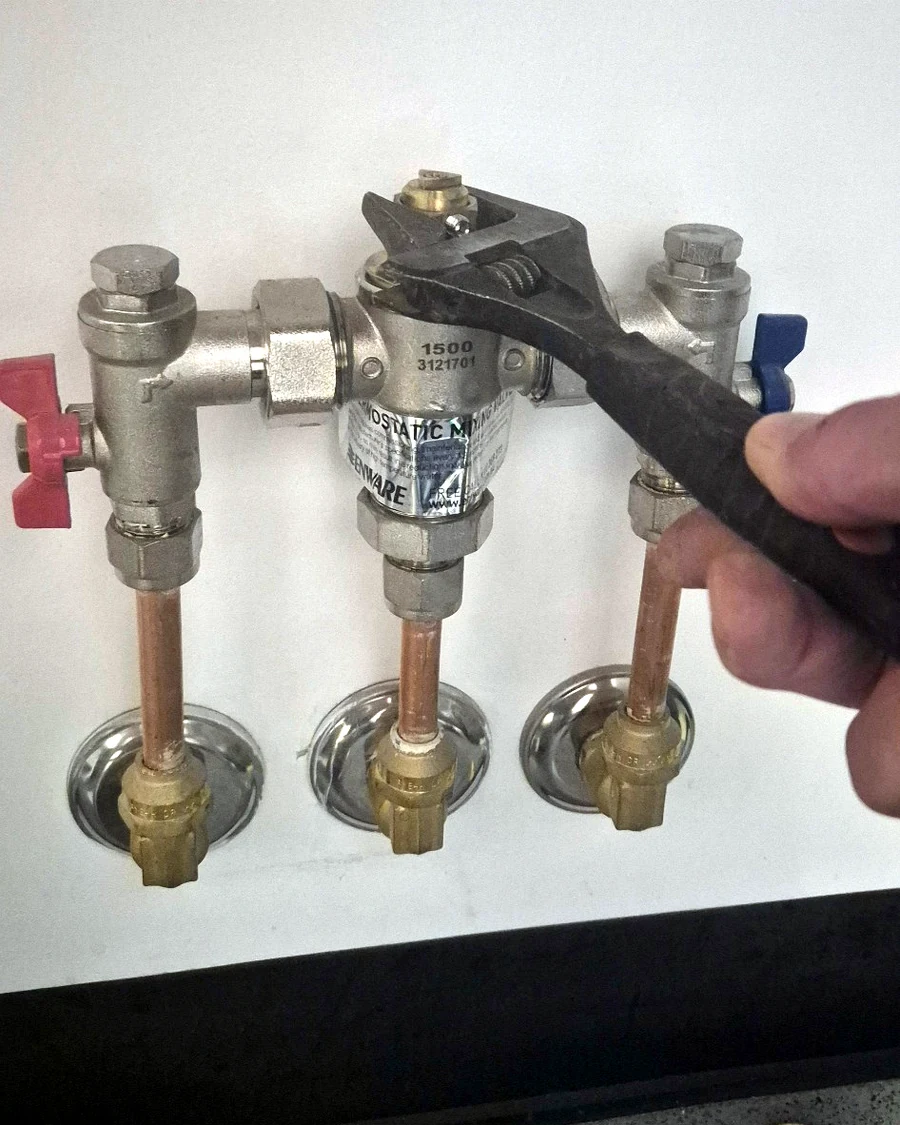
Tempering Valve Melbourne
If your hot water is too hot, not hot enough, or keeps changing temperature in the shower, you may need a tempering valve repair or replacement in Melbourne. Your Choice Plumbers tests the actual water temperature, checks the hot water unit and control valves, and confirms the safest, most practical fix so your bathroom hot water is compliant, stable, and working properly again. In many cases, same-day tempering valve replacement is possible once the fault is confirmed.
What does a tempering valve do on a hot water system?
A tempering valve mixes hot and cold water so the water delivered to bathroom fixtures stays at a safer maximum temperature.
Why is my hot water too hot at the taps?
The tempering valve may be faulty, missing, incorrectly set, or no longer controlling the outlet temperature properly.
Why is my shower temperature inconsistent?
A worn tempering valve or in-apartment mixing valve can cause unstable shower temperature, especially on shared hot water systems.
Do I need a plumber for a faulty tempering valve near me?
Yes. Safe diagnosis, installation, and temperature setting should be handled by a licensed plumber.
Can tempering valve repairs or replacement be done the same day?
In many cases, yes. Once we test the system and confirm the fault, same-day replacement is often possible.
How do I know if the tempering valve is the problem and not the hot water unit?
We test both. That is critical, because many hot water complaints are caused by the control valve, not the heater itself.
5-Star Trust: What Our Local Customers Say About Sam, Natasha & The Team
What a Tempering Valve Does — and Why It Matters
A tempering valve is a hot water temperature control valve installed to reduce stored hot water down to a safer delivery temperature at bathroom fixtures such as showers, baths, and basins. In simple terms, the hot water system may store water hot enough for system safety, but the water that reaches the bathroom still needs to be controlled properly to reduce scald risk.
For homeowners, this becomes important when the bathroom water is suddenly too hot, only lukewarm, or unstable from one day to the next. In many of these situations, the hot water service is still heating correctly, but the valve controlling the delivered water temperature is no longer performing as it should.
This is also why homeowners searching for “hot water temperature control Melbourne” or “hot water scald prevention valve Melbourne” are often dealing with a practical comfort and safety problem rather than just a technical plumbing question. The valve has a direct effect on everyday use of the shower, bath, and basin.
When a Tempering Valve Is the Right Next Step
A temperature control valve becomes the right next step when the hot water system is producing heat, but the bathroom delivery temperature is wrong. That could mean water is coming through too hot and creating scald risk, or it could mean the water is being mixed down too far and never feels properly hot.
This is where proper diagnosis matters. Before replacing the hot water service, we check whether the issue is actually being caused by the tempering valve, a related duo valve, or another part of the control arrangement. That same diagnostic thinking is why many homeowners who call us for hot water repairs in Melbourne avoid unnecessary system replacement.
It is also important to understand when a tempering valve issue is enough on its own and when broader work is needed. If the heater is producing proper stored temperature and the complaint is only at bathroom fixtures, the valve may be the main fault. If the system is also suffering from poor recovery, ignition faults, pressure issues, or leaks, the problem may extend beyond the temperature control valve.
When the Valve Is the Problem — Not the Hot Water Unit
This is one of the most valuable distinctions we make on-site. One of the biggest mistakes on these jobs is assuming the water heater itself has failed. In reality, the unit may still be heating perfectly well, but a worn or inaccurate valve may be blending in too much cold water or no longer controlling outlet temperature correctly.
That was exactly the issue in our Brighton job, where the owner thought the hot water service had become weak, but testing showed the Rheem unit was heating properly and the real fault was the old tempering valve. Replacing the valve restored proper hot water performance without replacing the unit.
This type of scenario matters because it can save the owner from replacing a good heater unnecessarily.
Learn more: Tempering Valve Replacement Brighton VIC 3186 – Hot Water Not Hot Enough Fixed Properly
What We Typically Find on Site
When we attend a hot water temperature control job, we commonly find one of a few patterns. These jobs are rarely random. Usually there is a clear failure pattern once the system is checked properly.
Water Too Hot at Bathroom Fixtures
This is the unsafe version of the problem. The hot water may be coming through above the safe bathroom delivery temperature, which increases scald risk for children, elderly family members, and anyone using the shower or bath.
In practical terms, this is the homeowner who says the shower suddenly feels too sharp, the basin hot water feels unusually aggressive, or the bathroom tap is far hotter than it used to be. This can happen when the valve stops blending accurately, when the internal element deteriorates, or when the valve has been incorrectly adjusted in the past.
Water Not Hot Enough Even Though the Unit Is Running
This is extremely common. The hot water system may still be producing hot water, but the valve is over-tempering and reducing the delivered water too far. That can make people think they need a new heater when they actually need a tempering valve replacement Melbourne service.
This is often how the complaint sounds on-site: “The hot water system is on, but the bathroom water only gets warm.” In those cases, we test both the system and the outlet temperature rather than guessing. Sometimes the delivered temperature is around the low 40s, which feels inadequate even though the tank itself is hot.
Shower Temperature Keeps Changing
This is often seen in apartments or central hot water setups where the apartment has its own local mixing valve. The building hot water plant may still be operating normally, but the in-apartment valve can wear out and cause unstable shower temperature.
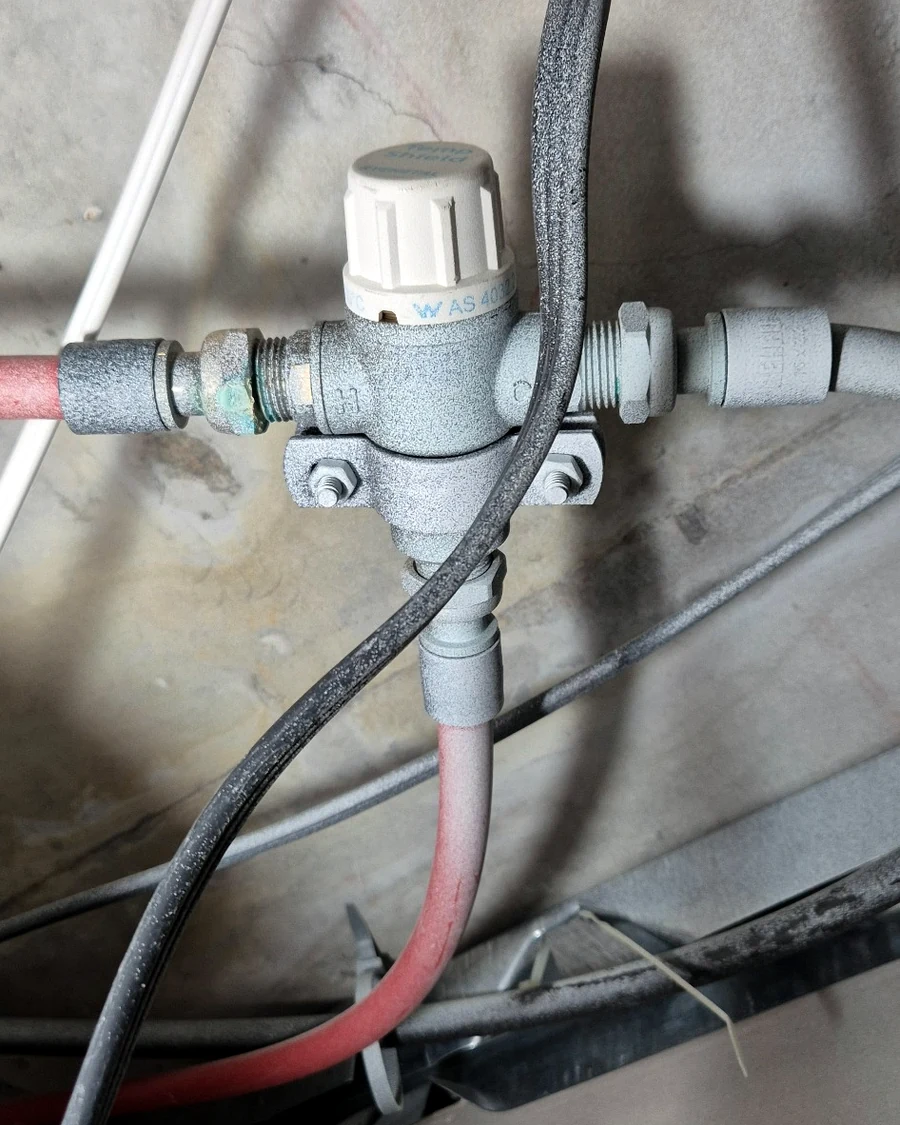
That is exactly what we found in Melbourne CBD, where the apartment’s concealed thermostatic mixing valve had reached the point where replacement was the most practical solution.
For apartment owners, this is often confusing because they assume the entire building plant is at fault. In reality, the instability may be occurring at the apartment ceiling space where the local valve is installed.
Learn more: Tempering Valve Melbourne CBD VIC 3000 – Apartment Shower Temperature Fixed Properly
Multiple External Valve Problems Affecting Performance
Sometimes the issue is not only the tempering valve. On some hot water systems, a failed duo valve or other ageing external component can affect both pressure and delivered temperature. That is why we assess the full hot water control arrangement rather than focusing on one part only.
Our Noble Park job is a good example. The unit itself was working, but two external valves had been left aged and in service, which caused both low hot water pressure and lukewarm performance.
This is especially important on older Melbourne homes and units where multiple external control valves may have remained in place across more than one heater replacement cycle.
Relevant case study: Plumber Noble Park Exposes Critical Valve Failure on Hot Water System
Tempering Valve Installation for New or Upgraded Hot Water Systems
A new heater does not automatically mean the temperature control side of the system is in good condition. If the old valve is left in place during a hot water upgrade, it can undermine the performance of the new installation and create ongoing complaints.
This is why a “new hot water system needs tempering valve Melbourne” scenario is so common. The tank or unit may be fresh, but an old valve can still leave the owner with poor temperature performance. On these jobs, we check the broader hot water setup, including related items that affect home protection such as excessive pressure, ageing flexible hoses, and surrounding plumbing condition.
That is particularly relevant in Melbourne homes where pressure can be higher than ideal and the hot water system has already had a long service history. A new cylinder or continuous flow unit may be installed outside, but the ageing valve, pressure conditions, or existing surrounding fittings can still compromise the result. Where relevant, we may also recommend a flexible hose safety check and replacement or a pressure limiting valve upgrade.
Tempering Valves in Homes vs TMVs in Apartments
Standard Domestic Tempering Valves
These are typically found on household storage hot water systems. Their role is to reduce delivered water temperature to a safer level at bathroom fixtures.
In Melbourne, we commonly see these on outdoor gas storage systems, electric storage units, and some replacement setups where the heater has been upgraded but the surrounding plumbing remains older. On these jobs, the real decision point is not just whether the valve is present, but whether it is still performing accurately.
Apartment and Shared Hot Water TMVs
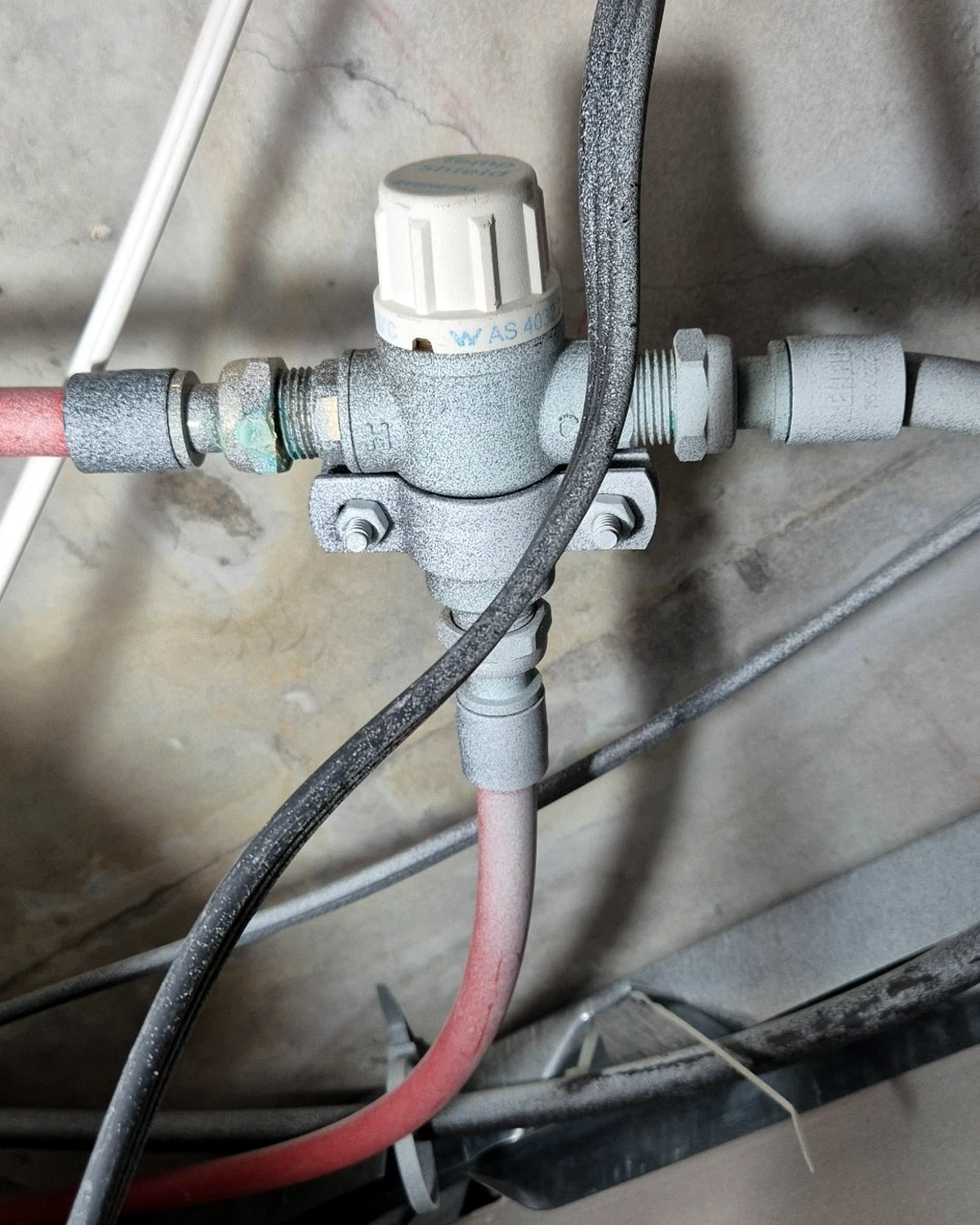
In some apartment buildings, the property may be supplied from a shared central hot water system, with the apartment’s own thermostatic mixing valve controlling the final delivered temperature locally. These valves are often hidden in ceiling spaces and can cause inconsistent shower temperature when they deteriorate.
For apartment owners, the symptom often sounds like “water temperature too hot in shower Melbourne” or “shower temperature keeps changing Melbourne,” when the real issue is inside the apartment ceiling rather than at the building plant.
This is one reason temperature control work in apartments needs diagnosis-first thinking rather than assumptions. Access, concealment, and the shared system arrangement all affect the way the job is handled.
Why Tempering Valves Fail or Drift Out of Performance
Age and Internal Wear
Over time, internal components wear, accuracy reduces, and performance can drift. That can lead to either excessive mixing or poor temperature control. This is one of the most common patterns we see in homes where the valve has simply stayed in place for years without anyone realising it is now the weak point in the system. The problem often comes on gradually, which is why owners tend to notice comfort issues before they realise there is a compliance or safety angle.Debris, Scale, and Water Quality Issues
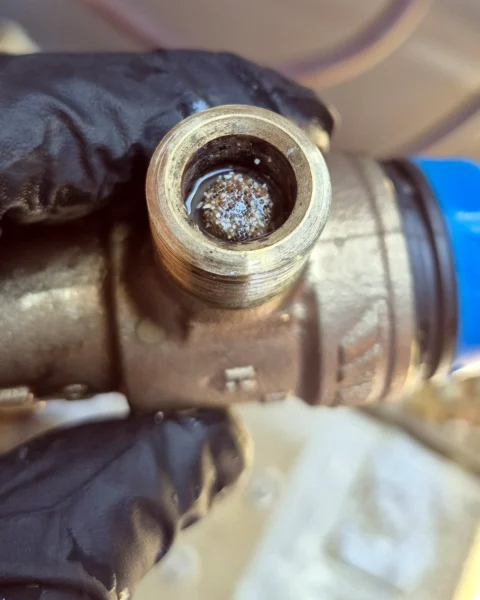
Scale and debris can affect the valve’s ability to blend correctly. In some homes, high pressure and general system wear can add to the strain on surrounding components too. Where strainers or internal pathways become affected, the valve may start behaving inconsistently rather than failing all at once. That can produce symptoms such as a shower temperature that changes mid-use or hot water that feels different between fixtures.Old Valves Left in Place During Upgrades
This is one of the biggest missed opportunities. A homeowner invests in a newer hot water system, but the older control valve is left in place. The result can be continuing temperature problems even though the new heater itself is fine. We see this often enough that it has become a key checkpoint for us. If a newer heater is present but the performance is poor, we immediately look at what surrounding control components were reused, because that is often where the real issue sits.Related Valve Issues on the Same System
Sometimes the valve fault is part of a wider hot water plumbing issue. A failed duo valve, pressure issue, or other ageing component may also need attention. This is why broader diagnosis matters, especially on older systems or when the owner is also dealing with symptoms like poor pressure, leaks, or noises. In some homes, related warning signs may overlap with issues covered on our water hammer solutions page or water leak detection service page. If the valve problem is ignored too long, the result can be more than just inconvenience. It can mean ongoing poor performance, repeat call-outs, and money spent on the wrong repair path.How We Diagnose and Fix Tempering Valve Problems
A proper process matters on these jobs because the homeowner complaint and the real fault are not always the same thing. The goal is to confirm the cause first, then recommend the least invasive and most reliable fix.
Step 1 — Confirm the Homeowner’s Actual Hot Water Complaint
We start with the lived problem, not assumptions. That may be hot water too hot, not hot enough, inconsistent shower temperature, or concern about safe bathroom delivery temperature.
That first step matters because phrases like “my hot water isn’t right” can describe very different faults. We narrow the complaint down to the actual user experience before touching the system.
Step 2 — Check Whether the Hot Water Unit Is Heating Properly
Before blaming the valve, we assess whether the heater itself is operating correctly. That helps us separate a genuine hot water unit fault from a valve or control problem.
This is where many wrong diagnoses happen. If the heater is doing its job and the stored water is hot, replacing the whole unit will not solve a valve that is incorrectly mixing the outlet temperature.
Step 3 — Test the Delivered Water Temperature
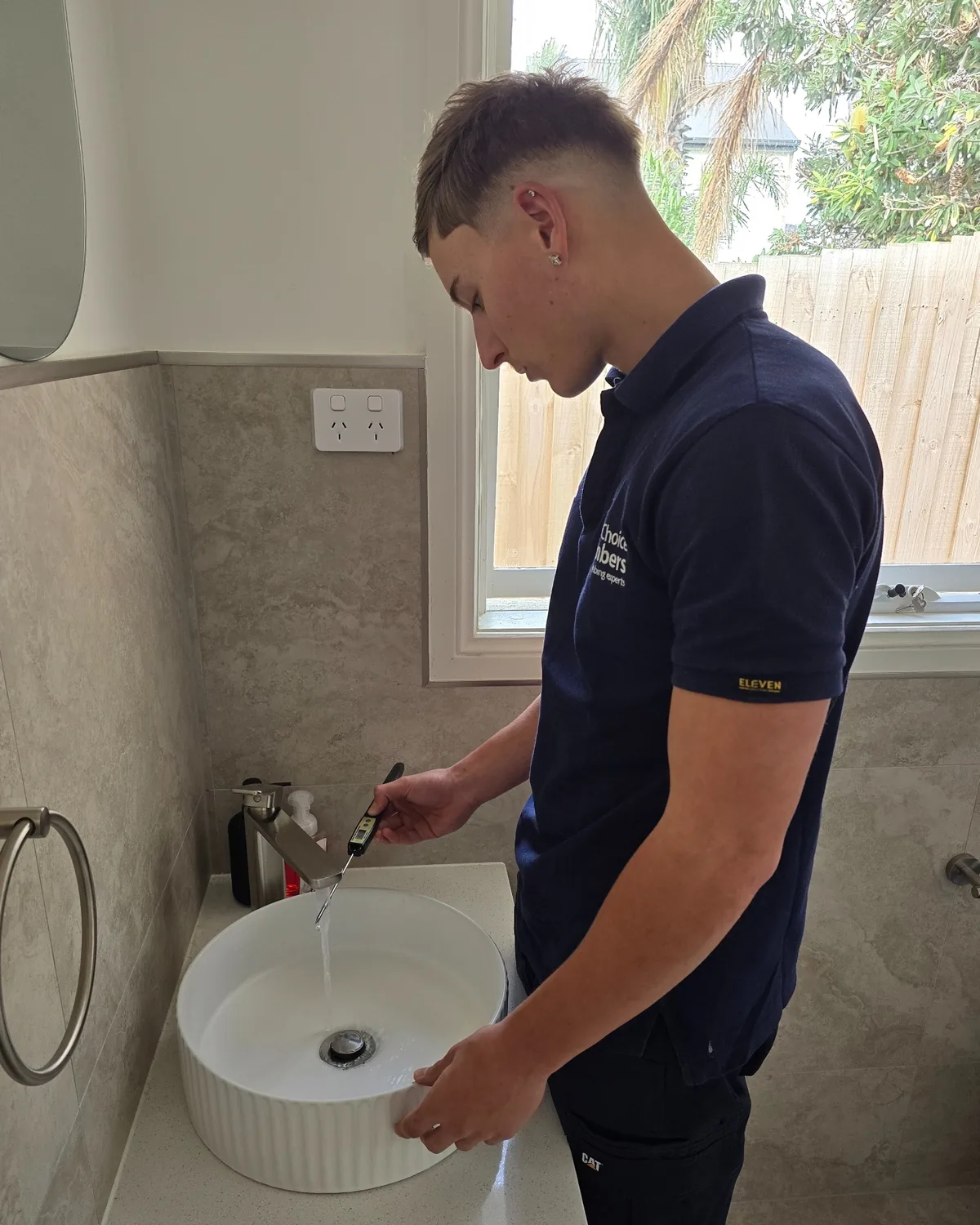
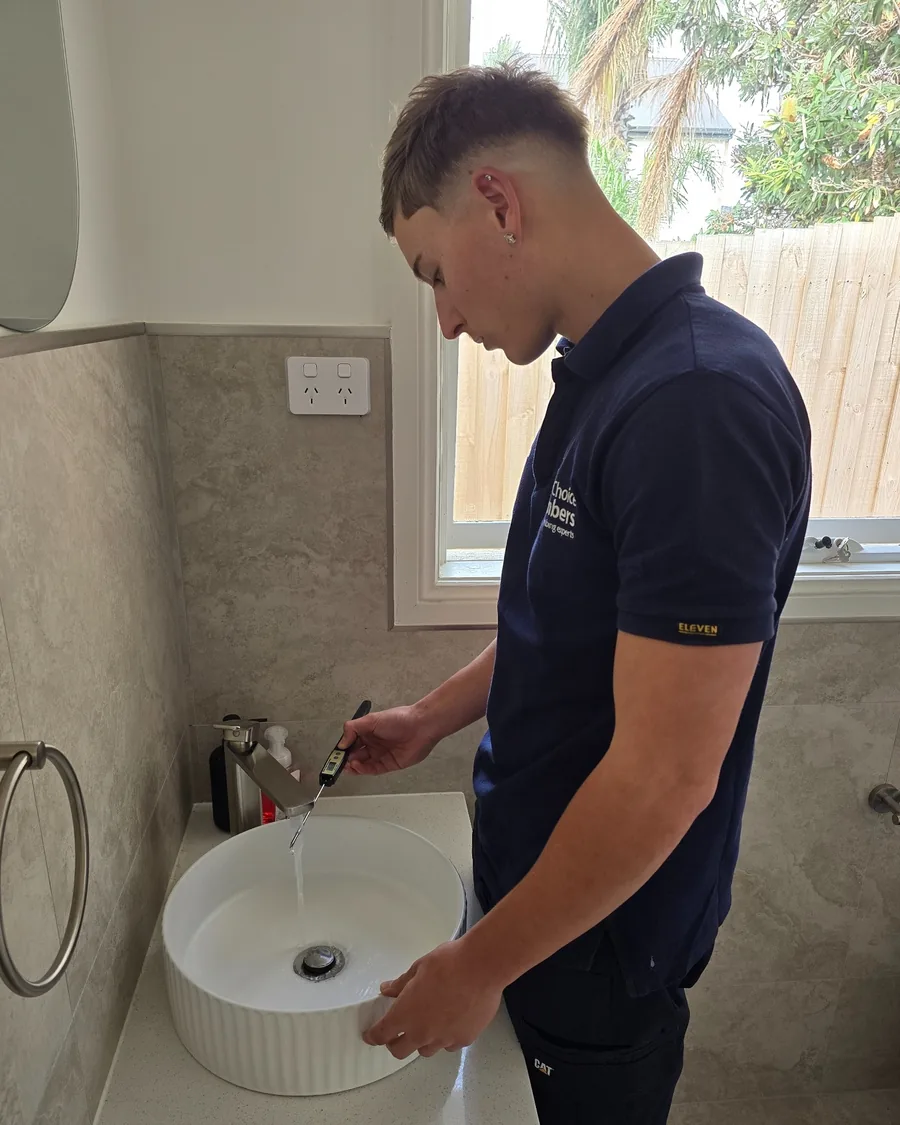
We test outlet temperature at the relevant fixtures to confirm what the homeowner is actually receiving. This is critical for identifying under-tempering, overheating, and instability.
This is also the step that answers questions like “How do I know if my tempering valve has failed?” and “Why is my hot water too hot at the taps?” because it gives a measured result rather than guesswork.
Step 4 — Inspect the Existing Valve and Associated Components
We inspect the valve condition, surrounding pipework, and related control components where relevant. On apartments, that may mean accessing a concealed ceiling panel. On homes, it may mean checking what was or was not replaced during a prior upgrade.
We also consider the age and layout of the system. In Melbourne, that can mean anything from a compact townhouse setup to an older freestanding home where the external valves have remained in service through multiple plumbing updates.
Step 5 — Recommend Repair, Replacement, or Broader Hot Water Work
If the valve is clearly faulty, replacement is often the most reliable path. If the wider system shows signs of related issues, we explain that clearly so the owner understands whether the job is isolated or part of a larger hot water repair or prevention need. This is where we also explain when a tempering valve alone is enough and when it is not. If the system has broader age-related issues, leaks, pressure faults, or control valve failures, solving only one component may not fully restore the result the homeowner expects.Step 6 — Set, Test, and Confirm Safe Operation
Once installed, the valve is commissioned and the delivered hot water is tested to confirm it is working properly and safely.
That final testing step is what turns the job from a basic part swap into a properly completed temperature control service. It gives the owner confidence that the bathroom hot water is both comfortable and safely controlled.
Tempering Valve Melbourne – Real Case Studies & Results from Sam, Natasha & The Team
Tempering Valve Replacement Fixed Low Hot Water in Brighton VIC 3186
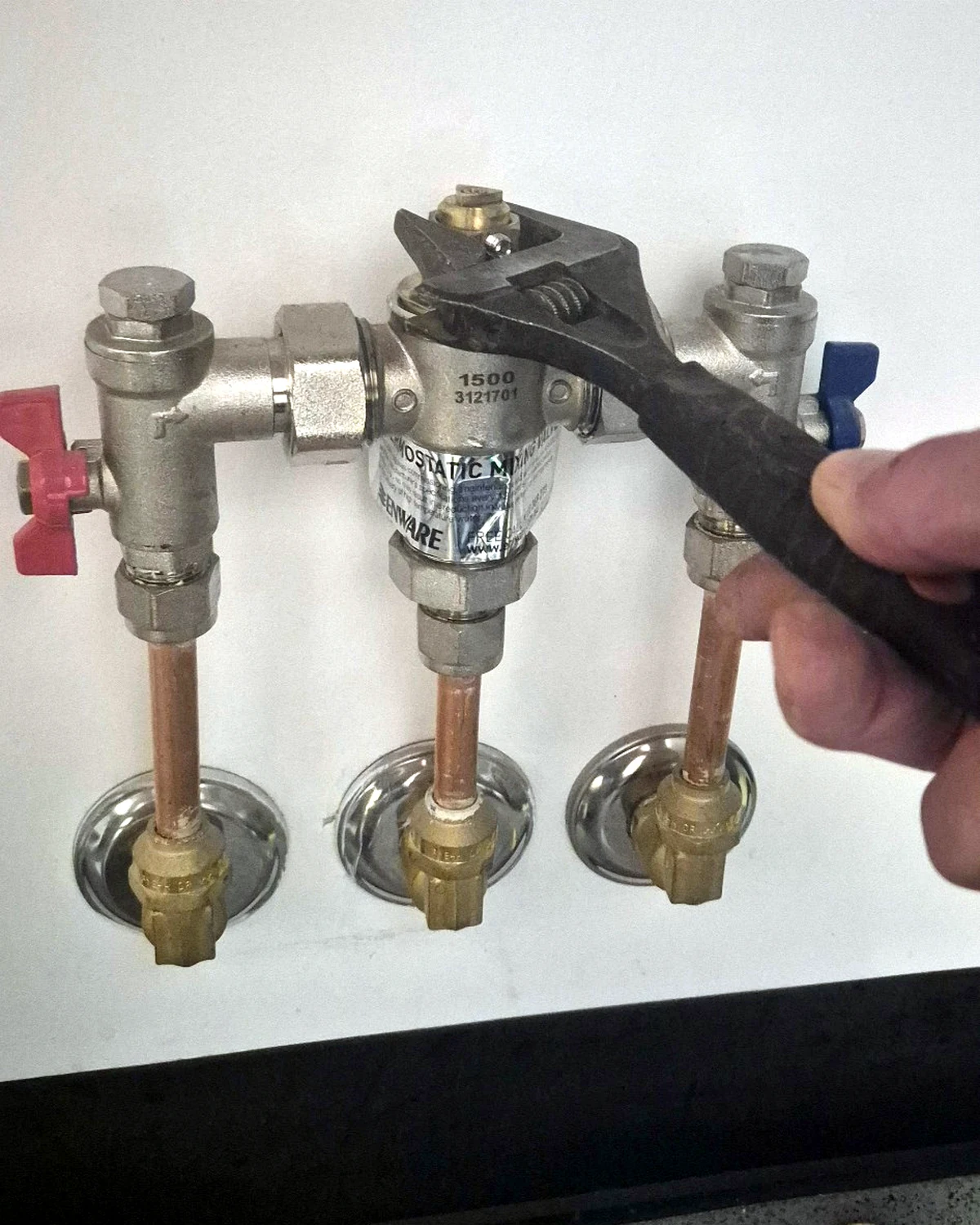
At a Brighton home, the owner noticed the bathroom hot water was no longer hot enough, even though the Rheem Stellar gas hot water system was only around three years old. After checking the unit, we confirmed the tank was heating properly and the problem was happening after the water left the system. Testing at the bathroom fixtures showed the delivered temperature was only around 40°C, which pointed to a faulty tempering valve mixing the water too cold. A new Tomson 15mm tempering valve was installed and set correctly, restoring safe and usable hot water delivery to the bathroom fixtures. Read more: Tempering valve replacement in Brighton fixed low bathroom hot waterApartment Shower Temperature Fixed in Melbourne CBD VIC 3000
At a Melbourne CBD apartment, the client was dealing with inconsistent shower temperature and wanted to know whether the issue was coming from the apartment or the building’s shared hot water system. We confirmed the apartment was supplied by a common hot water system and then inspected the local thermostatic mixing valve through the bathroom ceiling access panel. The strainers were not blocked, but the valve had been in service for more than nine years and was no longer controlling temperature properly. A new 20mm AVG thermostatic mixing valve was installed and commissioned to deliver stable, compliant hot water at 50°C. Read More: Apartment shower temperature fixed with a new thermostatic mixing valve in Melbourne CBDHot Water Valve Failure Repaired in Noble Park VIC 3175
At a Noble Park home, the owner was experiencing low hot water pressure and lukewarm water from a Rheem 170L gas hot water system. Our diagnosis showed the hot water unit itself was operating correctly, but two ageing external valves were causing the real problem. The failed duo valve was restricting pressure and flow, while the failed temperature control valve was mixing in too much cold water. Both valves were replaced, the hot water delivery was restored, and the new temperature control valve was calibrated to deliver compliant hot water below 50°C. Read more: Hot water valve failure in Noble Park repaired with a new temperature control valveLicensed Installation, Safe Temperature Control, and Compliance
Why Compliance Matters
Hot water systems need to store water hot enough for system safety, but the water delivered to bathroom fixtures must still be controlled to a safer maximum temperature. That is why proper temperature control matters not only for comfort, but also for scald prevention and compliance. For the homeowner, this is not just a paperwork issue. If the delivered temperature is wrong, the daily experience in the shower changes immediately, and the safety risk changes with it.Our Compliance-First Approach
At Your Choice Plumbers, we do not just swap a part and leave. We test what the system is doing, identify the real cause of the complaint, and make sure the final delivery temperature is set correctly for everyday residential use. That same prevention-first mindset also carries across to related risks such as burst pipes, leaking showers, and hidden water leaks that can damage the home over time. Proper diagnosis first is usually what saves the homeowner money, repeat disruption, and unnecessary replacement work.Complimentary Property Protection Audit
Every completed plumbing job with Your Choice Plumbers includes our Complimentary Property Protection Audit to help protect your home from preventable water damage and compliance risks. As part of this process, we check for key issues that many homeowners never realise are putting their property at risk, including:
- excessive water pressure above 500 kPa, which can stress taps, mixers, valves, appliances, and pipework
- flexible braided hoses that may be rusted, swollen, poorly supported, or approaching failure
- hot water temperature risks, including scalding concerns where household delivery temperatures are not properly controlled
- visible signs of ageing plumbing components that may fail unexpectedly

This is especially important on everyday home plumbing visits, because repeated fixture failures, hot water issues, leaks, and valve problems can sometimes point to broader pressure or plumbing system stress.
Related Plumbing Services That Often Go Hand in Hand
Service Areas Across Melbourne
 Plumber Dandenong

Frequently Asked Questions About Tempering Valves in Melbourne
What is a tempering valve and do I need one?
A tempering valve controls the temperature of hot water delivered to bathroom fixtures. If your home has a storage hot water system, it is commonly a key part of safe bathroom hot water delivery.
Why is my hot water too hot at the taps?
This can happen when the tempering valve is faulty, missing, incorrectly adjusted, or no longer controlling temperature properly.
What temperature should hot water be at bathroom taps and showers?
For normal domestic use, hot water delivered to bathroom taps and showers should be a maximum of 50°C. That helps reduce scald risk while still providing safe, comfortable hot water for everyday use.
Can a faulty tempering valve make the hot water feel not hot enough?
Yes. If the valve is blending in too much cold water, the hot water unit may still be fine while the bathroom water only feels warm.
How do I know if my shower temperature problem is the valve or the hot water unit?
The only reliable way is to test both. We check whether the unit is heating properly and then test the delivered temperature at the fixtures.
Can a leaking tempering valve be repaired?
Sometimes replacement is the better option, especially when the valve is older, worn, or already affecting temperature control.
Should a tempering valve be repaired or replaced?
Short answer: replacement is often the more reliable option when the valve is older, leaking, inaccurate, or already causing unstable delivery temperatures.
Do apartment hot water systems use the same type of valve as houses?
Not always. Many apartments with shared hot water systems use a local thermostatic mixing valve within the unit rather than a standard domestic setup.
Should I replace the tempering valve when replacing a hot water system?
Often, yes. Leaving an older valve in place can lead to ongoing performance and compliance issues even with a newer heater.
What happens if a faulty temperature control valve is ignored?
You may continue to have unsafe hot water, poor shower comfort, scald risk, or ongoing complaints that are wrongly blamed on the heater itself. In some cases, the owner ends up spending more because the real cause was not diagnosed early.
Get Your Hot Water Temperature Checked Properly
If your hot water is too hot, not hot enough, or the shower temperature keeps changing, do not guess and do not replace the wrong part first. A faulty tempering valve can leave your home with ongoing comfort problems, scald risk, and unnecessary hot water costs if the real cause is not diagnosed properly.
Your Choice Plumbers provides premium, compliance-focused tempering valve diagnosis, repair, and replacement across Melbourne, with clear advice, proper temperature testing, and long-term prevention in mind. Getting the right diagnosis first is usually what protects the homeowner from repeat problems, larger repair costs, and wasted money on a heater that was never the real issue.
Left too long, a faulty tempering valve can leave your home with unsafe hot water, unstable shower temperature, poor comfort, and unnecessary spending on the wrong hot water repair path.